
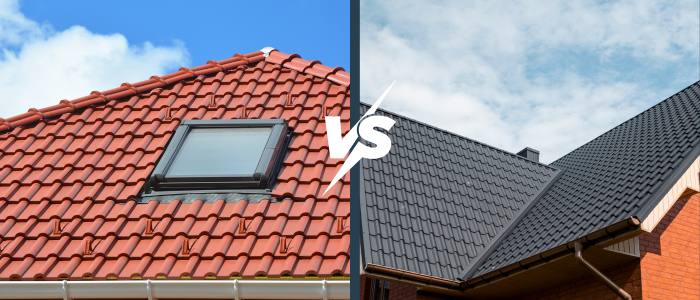
Your roof is more than just a lid on your house; it’s a multi-ton structural shield. When you graduate from the world of temporary asphalt shingles, you enter the arena of the heavyweights: Clay and Concrete. One is a kiln-fired masterpiece of ancient tradition; the other is a marvel of high-pressure modern engineering. But which one will actually protect your equity—and your family—for the next century? In this definitive guide, we strip back the layers to reveal the cold, hard science of tile roofing.
The DNA of the Tile: Composition and Manufacturing
To understand performance, we must look at the molecular level.
Clay Tiles: The Vitrified Wonder
Clay tiles, often called Terra-cotta, are manufactured by mining natural clay and shale deposits. The magic happens in a kiln, where tiles are fired at temperatures between 1,800°F and 2,100°F for up to 24 hours.
- The Process of Vitrification: This intense heat triggers a chemical change called vitrification, where clay particles fuse into a glass-like, non-porous state.
- Inert Nature: Once fired, clay is chemically stable. It doesn’t react to UV rays, salt spray, or acidic rain—the reason 1,000-year-old clay tiles are often found intact in archaeological digs.
Concrete Tiles: The Engineered Stone
Concrete tiles are an “engineered stone” made from Portland cement, graded sand, and water.
- The Curing Process: Unlike clay, concrete isn’t fired; it is “cured” through hydration. The cement reacts with water to form a crystalline structure that hardens over time.
- Dynamic Strength: Concrete tiles actually get stronger over the first few years as hydration continues, though they remain more porous than fired clay.
Technical Performance Benchmarks (ASTM Standards)
Google favors content that cites industry standards. Here are the benchmarks professionals use to evaluate quality:
| Technical Metric | Clay Tile (ASTM C1167) | Concrete Tile (ASTM C1492) |
| Water Absorption Rate | ~6% (Low) | ~13% (High) |
| Standard Weight (per Square) | 600 – 650 lbs | 820 – 1,100 lbs |
| Wind Resistance | Up to 150 mph | Up to 180 mph |
| Impact Rating | Usually Class 3 | Often Class 4 (Highest) |
| Lifespan | 100+ Years | 30 – 50 Years |
Weight and Structural Integrity: The $10,000 Question
This is the “deal-breaker” for many homeowners. A tile roof can add 10 to 20 tons of weight to a standard house.
The Dead Load Reality
A “square” (100 sq. ft.) of asphalt shingles weighs roughly 240 lbs. Concrete tiles weigh about 40% more than clay tiles. When saturated by rain, concrete’s 13% absorption rate means the roof gains massive additional weight during storms.
- Structural Reinforcement: If your home wasn’t built for tile, you may need to “sister” rafters or add load-bearing walls, adding $5,000 to $15,000 to your project.
- Clay Advantage: Being lighter, clay often installs on existing structures without modification, saving substantial money on engineering.
Water Absorption: The Battle Against Biology
Porosity is the single biggest differentiator in day-to-day performance.
- Clay (The Water Miser): Its low 6% absorption rate means it sheds water quickly and dries fast. This naturally resists the growth of mold, mildew, and algae.
- Concrete (The Water Drinker): Higher porosity (13%) allows moisture to linger within the tile. In humid climates like Florida or the Gulf Coast, this can lead to black streaks and heavy moss growth, requiring professional cleaning every 3–5 years.
Aesthetics: From Spanish S-Tiles to Modern Mimicry
The visual impact of a tile roof can increase a home’s resale value by up to 20%.
Clay: Timeless and Permanent
Clay is famous for the Spanish S-Tile and Mission looks. Because the color is “fired-in,” it will not fade, even after 50 years of desert sun. It develops a natural patina over decades that actually improves its aesthetic value.
Concrete: The Chameleon
Concrete is the king of versatility. It can perfectly mimic:
- Hand-Split Wood Shakes
- Natural Slate
- Fading Warning: Concrete is colored with pigments. Over 15–20 years, UV exposure can cause fading or “chalking” (efflorescence).
Climate Suitability Matrix
- Hot/Arid (The Desert): Clay wins. It has a higher Solar Reflectance Index (SRI), keeping attics significantly cooler.
- Coastal/Humid: Clay wins. Its low absorption prevents the salt-air corrosion and biological growth common in these zones.
- Hail Alley (The Midwest): Concrete is the champion. It typically carries a Class 4 Impact Rating, surviving hail that would shatter brittle clay tiles.
- Cold/Freeze-Thaw: Historically, clay cracked in freezes, but modern Grade 1 clay tiles are now engineered for northern winters.
Sustainability and Energy Efficiency
Both materials are “Green,” but clay has a distinct edge in Life Cycle Assessment (LCA).
Thermal Mass: Both materials absorb heat during the day and release it slowly at night, reducing annual cooling loads by up to 20%.
Recyclability: Both are mineral-based and fully recyclable into road base or new manufacturing streams.
Carbon Footprint: Clay is more eco-friendly as it uses natural materials and lasts twice as long. Concrete has a larger carbon footprint due to the high-energy process of cement production.
Maintenance and “Lime Bloom”
- Efflorescence: A common “scare” for concrete owners is a white, chalky powder called lime bloom that appears in the first year. It is purely cosmetic and usually washes away with natural rainfall.
- Underlayment: While tiles last 50+ years, the underlayment (the waterproof layer) usually only lasts 20–30. For a “forever roof,” always upgrade to a synthetic high-temp underlayment.
Brand Showcase: Who to Trust?
- Ludowici (Clay): The “Rolls Royce” of clay tiles, known for historic restoration and 75-year warranties.
- Eagle Roofing (Concrete): A leader in high-performance concrete tiles that mimic slate and shake.
- Boral/Westlake (Both): A massive manufacturer providing a huge range of both clay and concrete options for different budgets.
Detailed Cost Comparison: Upfront vs. Lifecycle
| Metric | Concrete Tile | Clay Tile |
| Installed Cost (per sq. ft.) | $9 – $19 | $12 – $35+ |
| Annual Cost of Ownership | ~$700 | ~$467 |
Clay is the cheaper roof over a 75-year period because it rarely needs replacement or repainting.
FAQs
Which lasts longer, clay or concrete roof tiles?
Clay tiles are the longevity champions, frequently lasting 100 years or more due to kiln-fired vitrification. Concrete tiles are highly durable but typically have a shorter service life of 30 to 50 years as the material is more porous.
Is a clay roof more expensive than concrete?
Yes, clay is significantly more expensive upfront. Expect to pay $12–$35 per square foot for clay, whereas concrete usually costs $9–$19. However, clay’s 100-year lifespan often results in a much lower annual “cost per year” over time.
Do I need to reinforce my roof for tile?
Most likely. Because clay and concrete can weigh 600 to 1,100 pounds per square, they are 3x heavier than shingles. A structural engineer must verify that your rafters and load-bearing walls can support the massive increase in weight.
Do concrete roof tiles fade over time?
Yes. Since concrete tiles are colored with pigments rather than kiln-fired glazes, they can experience UV fading or “efflorescence” (white chalking) over 15–20 years. Clay tiles have permanent, “fired-in” colors that remain vibrant for the life of the tile.
Which tile is better for cold, snowy climates?
Modern Grade 1 clay tiles are excellent, but concrete is often preferred in heavy snow zones. Concrete’s higher density and interlocking designs handle snow-pack weight better, while its superior impact resistance protects against falling ice and large hail stones.
Final Thought
Regardless of whether you choose the ancient durability of clay or the engineered versatility of concrete, the most critical component of your roof isn’t the tile—it’s the installation team.
A tile roof is a complex system of underlayment, flashings, and ventilation. Cutting corners on a cheap contractor to save 10% on labor can ruin a 50-year investment in just five years. Always verify your roofer is “Manufacturer Certified” and ask for a structural engineer’s report if you are switching from shingles.
Your roof is the first line of defense for your largest asset. Choose the material that fits your budget today, but build for the legacy you want to leave tomorrow.